Dear fellow wonderer,
I’ve been thinking about the collective, how we communicate. How so many of us are looking for answers, tamping down fears. How sometimes useful answers come in small memos, mere notes.
***
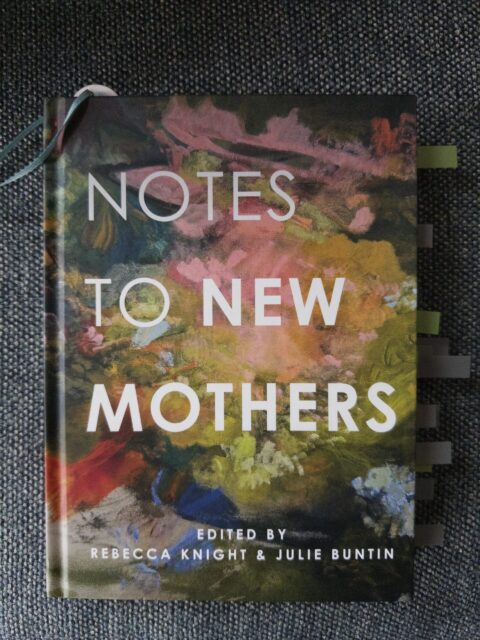
At Storytime for Caregivers this week, we were joined by two local contributors to the collection Notes to New Mothers. This is a lovely compilation of short missives from 65 writers and artists on motherhood, arranged by topic. Starting with laboring and ending with healing, with many others in between. Feeding. Working. What have you gotten wrong?
Ashley Nelson Levy and Kiley McLaughlin were generous guests, sharing snippets of what they’d written: on going back to work and C-section stomachs and nursing strikes and aspirating snot.
They told how editors Rebecca Knight and Julie Buntin didn’t want polished work but honest dispatches, the sort of thing contributors might have tapped into their Notes app at 2:00 a.m.
***
A note that hangs beside my desk.
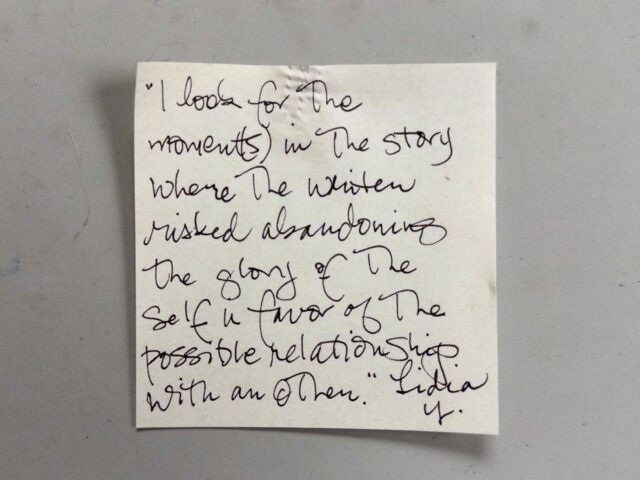
I look for the moments in the story where the writer risked abandoning the glory of the self in favor of the possible relationship with an other.
A quote I culled from an interview with Lidia Yuknavitch.
***
One new mom at the gathering told how she loved the book’s form, the brief bits, the raw honesty. The sort of thing she could pick up and dip into herself at 2:00 a.m.
It’s the only book, she said, that she’s finished since giving birth to her son.
***
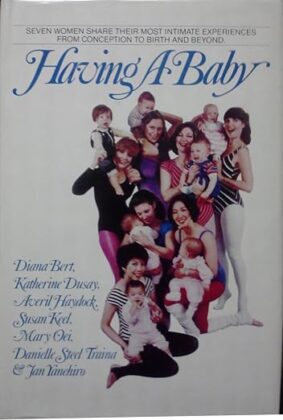
When I was first pregnant, I loved this weird book by the writer Danielle Steel and a bunch of friends she’d gathered for prenatal exercise classes. Those women in their Jane Fonda getups—the book was published in 1984—already looked neolithic to my 1992 pregnant self, and in so many ways they were unrelatable. Most were a good ten years older than I was at 26, and most belonged to a wealthy San Francisco echelon of the sort that took private exercise classes in the opulent apartment of Danielle Steel. A random detail I remember: one mother nattered on about how, when she was pregnant, her husband liked going into his “world-class” wine cellar each night to choose a bottle or two, which he would polish off, bothered that she wouldn’t have more than a glass.
Still, the book laid out these women’s experiences in chatty, honest, first-person retellings that could easily have fit under the topics laboring, healing, feeding, working, what have you gotten wrong? I was young, and none of my friends were yet mothers. This was before (gasp!) most people had internet. So desperate was I to hear true experiences of new motherhood that I endured the live-in nannies and world-class wine cellars.
***
Kiley said her contributions to the book were often thoughts she actually did type into her Notes app.
Ashley said many of hers were letters she wrote to her infant son. The epistolary form, she felt, helped her say what she wanted to say.
***
Substack has a system, much like Twitter of yore, called Notes, where you can post short messages. Never have I had a Substack note go viral like this one.
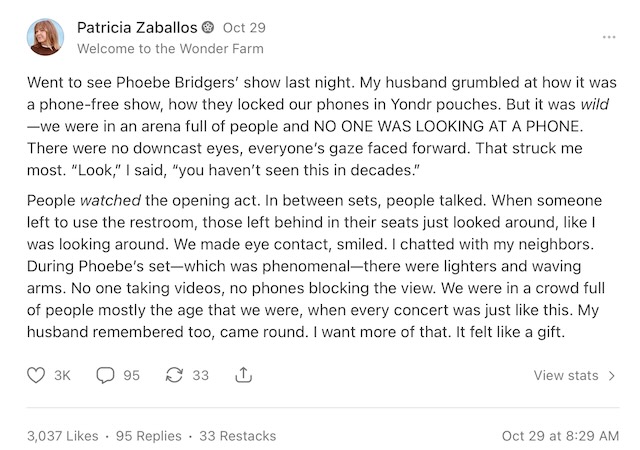
The algorithm is still pushing it along, more hearts every hour. I love the irony of that. That an algorithm has somehow captured the longing so many of us have to be off the algorithm. To be together, attentive to only each other, in a room.
***
The other day at Storytime, there were so many new moms with babies. A dad, too, with an older child who put up with infants getting into her art supplies.
So attentive they were to Ashley and Kiley’s stories. (Maybe even more so than the babies at the end of the hour, when they got their own board book reading from Kiley and Ashley.)
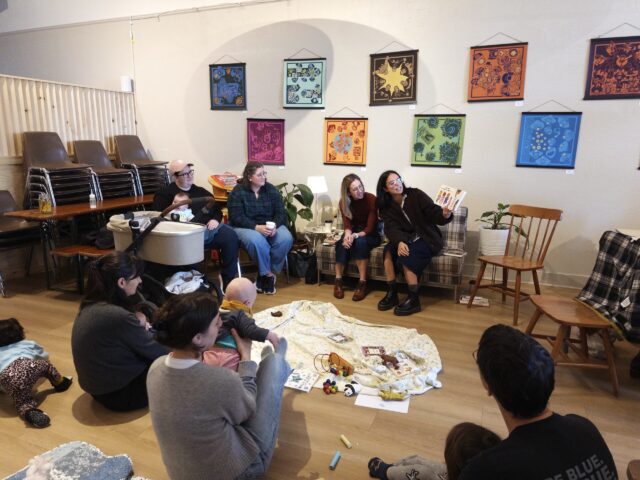
Afterwards, the new moms lingered, nursing and rocking and jostling babies on their hips, chatting with one another. This is a big reason I started this series, wanting this for them. It makes me so happy to see them, lingering together.
***
A different sort of note:
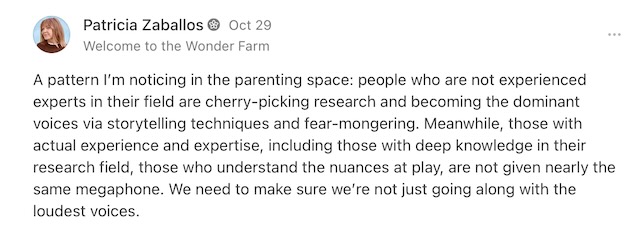
This one I shared with a link to my last post on not getting sold a story. Let’s just name names here. Emily Hanford. Jonathan Haidt. Emily Oster.
***
Then, this Substack note from Danielle Shugg:
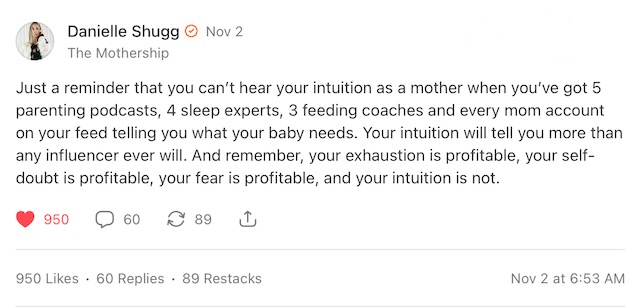
I’d italicize that last line if I could because this is a point that should be amplified.
***
***
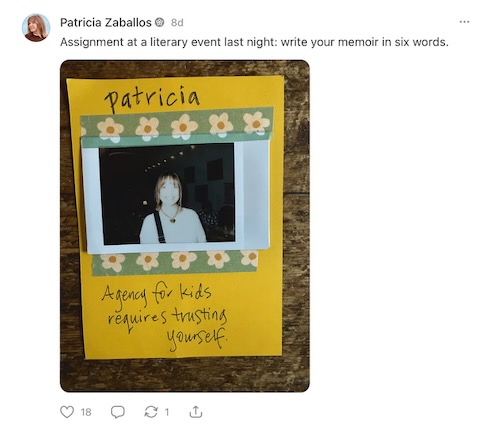
I’ve written a lot here about how hard it can be for mothers to trust their intuition these days. So much information from outside, from “experts”; so little space to hear what’s happening within.
Notes to New Mothers is an antidote to all that, a balm. A community of mothers, in a book.
A good start. But we need more than mothers in a book.
***
Ashley shares a story in the book that guts me. How, a couple months into motherhood, a mom from her birthing class reached out to take a walk. Ashley’s baby was colicky; she was depressed. But she went, worrying that her baby would cry and cry, and daunted by this very together other mom, with her state-of-the-art sound machine nestled into her stroller.
But as they walked, it was the other mother’s baby who cried and cried. As his mother tried to change his diaper, he somehow rolled from a stone and into the grass below. Panic and more crying and soon the other mother is covered in mustard-colored poop, though she keeps carrying on, the cries going on for another twenty-five minutes when finally the mother does something that amazes Ashley: she whips out her boob and breastfeeds her baby from where he’s crying in her front pack, without slowing her pace, without letting the conversation lull.
“Women are amazing,” Ashley thinks, suddenly able to recognize for the first time how hard her own short motherhood has been. “For a brief moment I love the woman like a sister. Even streaked in poop with a half-boob exposed and pushing an empty stroller, she has an air of grace about her.”
“I want to tell her that she is an incredible mother because it’s so clear that she is, and that this child will have a life of order and care and thoughtfulness and love, no matter what.”
But she doesn’t say that. Instead she thanks the mother for the walk and hopes they can do it again. “She agrees and it’s the last time I see or hear from her.”
Sob! It’s so sad, but so clear why Ashley couldn’t share her admiration with that mother. She was still shellshocked as a mother herself. I asked her about this the other day.
“I was still too raw,” she said.
***
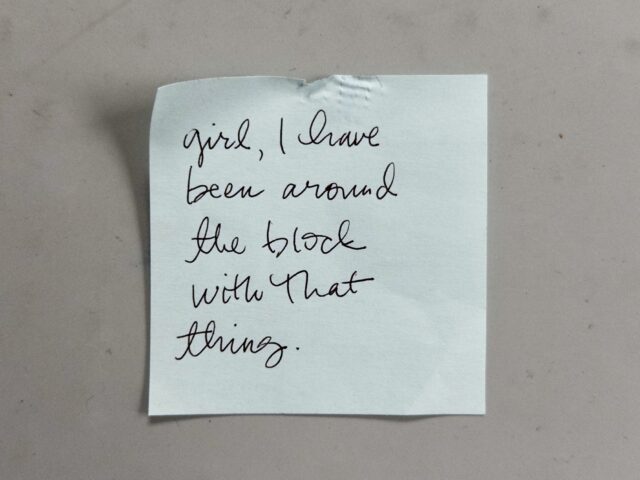
That note up there—Girl, I have been around the block with that thing—is another that hangs beside my desk. A line that walked from the mouth of Megan Stielstra, as she sat at the table in my backyard—Megan Stielstra in my backyard!—during the pandemic, when I was taking a year-long course with her, and we giddily relocated our editorial meeting away from Zoom and out into the open, since she was staying with her bestie, who happens to live in my hometown.
Discussing my essays, she said I was at my best when I connected with my reader, made them feel seen, gave off the vibe of Girl, I have been around the block with that thing.
Of course, this is a vibe that Megan nails better than any writer I know. Just read her poignant breakout essay from way back when, Channel B, about living through postpartum depression and how she was saved by her own surprising, fleeting connection with another mother.
***
Sixth months after I became a mother, my friend Janet became a mother, too—with twins! My first mother friend.
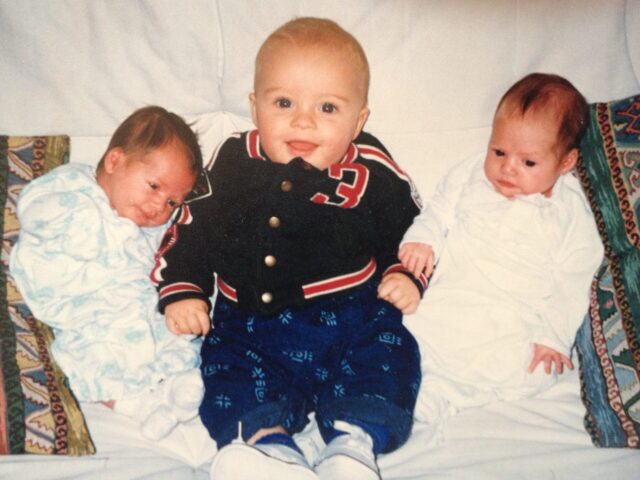
Then a few months later, her little family left for Oregon.
We’d follow them there, a few years later. But in the meanwhile, Janet and I wrote each other letters. I’d forgotten this until a few months back when she texted: Re-filing and look what I found! She sent images of long, hand-written and dot-matrix-printed missives from me in 1993, 1994, before we moved to Portland. I’m sure I must have hers in a box somewhere too.
It astounds me now that as a young mother I had time to write letters. But then I remember that before the internet showed up, I had a lot more space in my days.
We needed that connection. We did what we could.
***
To the Phoebe note, I added another, posted as a reply.
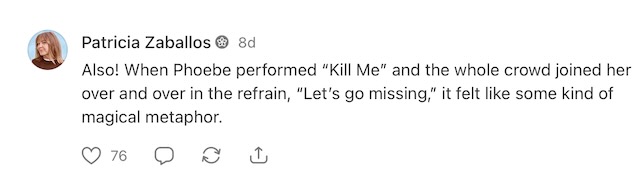
Isn’t that what we’re all longing for these days? To get together. To leave behind our phones and go missing.
***
I never found a community of fellow mothers until my oldest was six, and we’d started homeschooling. (Ye olde disclaimer 1.) Then I had a whole circle of friends, supporting me as I mothered my way right off into the wilderness.
You get tight, doing that. Years go by. At Storytime the other day, I turned my head and there was Tina, one of my oldest homeschooling friends, wanting to hear about Notes to New Mothers—she’s got a grandbaby now.
But she was also there, I know, for me.
***
My friend Meliss is another of those mom friends. She’s always texting me notes like this:
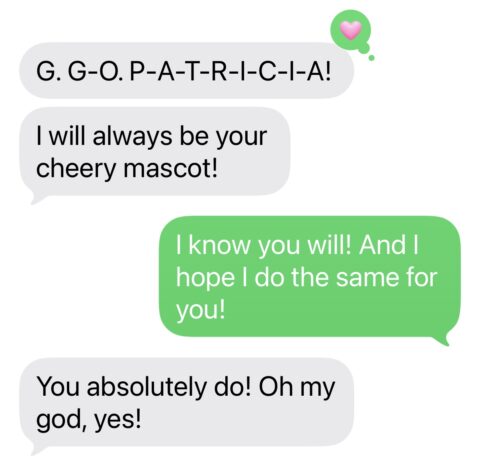
So many texts like this as our boys grew up together. Now our youngest two are roommates in Brooklyn, 3,000 miles away.
We commiserate about that, too.
***
Who knows what sort of connections these moms make at Storytime? Maybe it’s a momentary girl, I have been around the block with that thing that hits at just the right time, and fixes something cracked inside. Or maybe a pair will exchange numbers, and send each other texts while breastfeeding, like one mom does night after night with another in Notes to New Mothers, until that relationship mysteriously ends. Or maybe a new friendship will start, one that goes on and on for years, until one day people are having grandbabies.
I do know that it isn’t easy to get out of the house with a new baby, with all the gear and bravery that entails. But these moms—and sometimes dads—manage it anyway, longing for something, some sort of connection, surely. They head out the door with hope, so much harder than scrolling on a couch at home, but so much more likely to get them what they need.
As always,
Patricia
cross-posted at Substack
- Yes, I homeschooled with my kids. I was a former public-school teacher who saw homeschooling as a way to save on childcare costs, as a grand experiment in progressive education. My kids turned everything I thought I believed about learning on its head, taught me to value interest-led learning and independence. Yes, we had a vibrant community of friends. Yes, all three chose to attend high school. Yes, I believe that homeschooling expanded my kids’ worlds, rather than limiting them. No, I don’t believe that everyone should homeschool. I want public schools to thrive and wish we could bring more homeschool-style interest-led, individualized learning to the public school classroom.